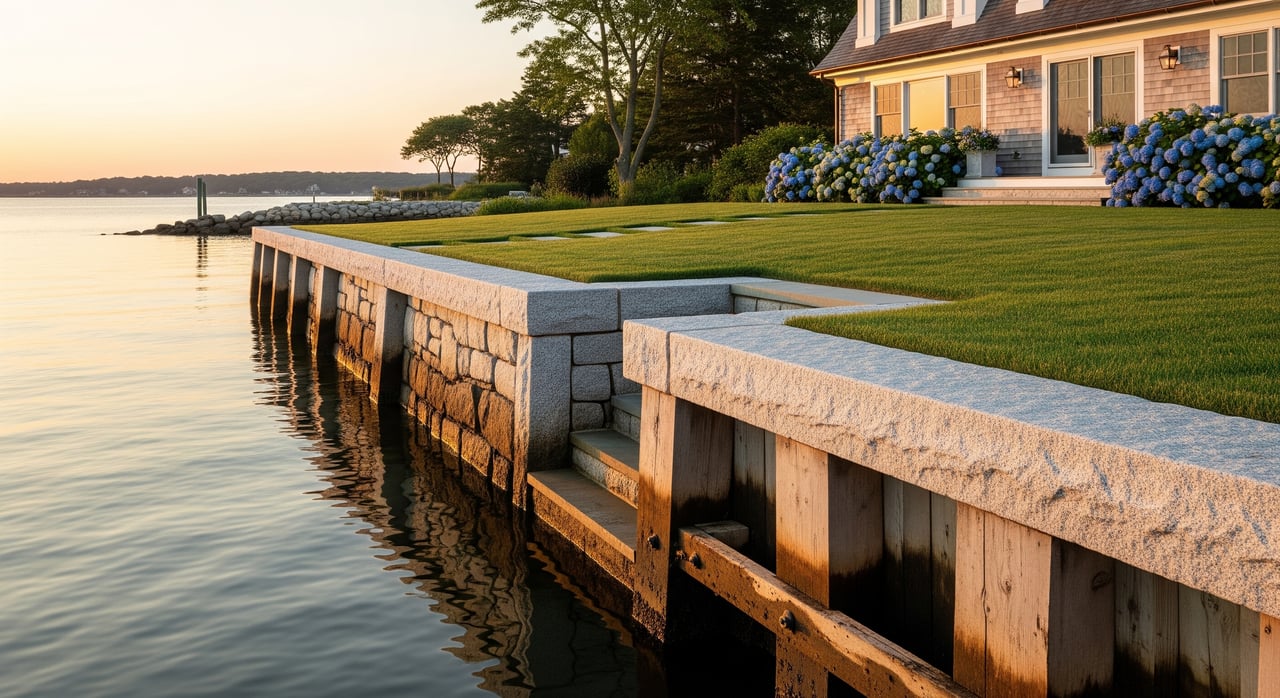
Salt, storms, and tide all work on your shoreline every day. If you own near the water in Rowayton, your seawall or bulkhead is the quiet hero protecting your yard, utilities, and home. A little attention now can prevent costly failures later and help you move faster when you need permits. This guide shows you how to inspect, maintain, and plan work in Norwalk, with links to the right local and state resources. Let’s dive in.
Know your shoreline and risks
Rowayton sits on Long Island Sound, so many lots face tidal action and storm surge. Start by confirming your flood risk using FEMA’s maps and the City’s guidance for flood zones and contacts. You can review Norwalk’s flood hazard page and find the FEMA Flood Insurance Rate Map resources to see how regulations may apply to your parcel. The City’s Harbor Management Plan also outlines how shoreline projects are reviewed in local waters.
- Check Norwalk’s flood guidance and contacts: Learn about the City’s Flood Hazard Zones
- Review FEMA mapping resources: FEMA DFIRM metadata for Fairfield County
- Understand local harbor rules: Norwalk Harbor Management Plan
Permits in Rowayton: who to call
Most shoreline work needs review before you start. Plan on coordination with Norwalk, the Connecticut Department of Energy and Environmental Protection, and sometimes the U.S. Army Corps of Engineers when work occurs waterward of the high tide line.
Municipal coastal review
Norwalk’s Planning and Zoning team conducts coastal site plan reviews for flood and erosion control structures. The Harbor Management Commission also reviews projects for consistency with local harbor goals. Connecticut’s Coastal Management Act explains when coastal site plans are required and how projects are evaluated.
- State law reference: Connecticut Coastal Management Act, Chapter 444
State and federal roles
DEEP’s Land and Water Resources Division regulates activities in tidal wetlands and below the high tide line. Many seawall replacements or toe protection projects need a DEEP permit, and some qualify for a general permit using the ezFile system. If your project affects navigable waters or places fill, the Army Corps may require authorization under nationwide permits.
- CT permitting details: DEEP LWRD coastal applications
- Federal permitting context: USACE nationwide permit information
Quick permitting checklist
- Call Norwalk Planning and Zoning and the Building Department to confirm a coastal site plan is needed.
- Hire a coastal engineer or shoreline design firm to prepare drawings and permit packets.
- Coordinate DEEP and, if applicable, Army Corps filings before any in‑water work.
- If storm damage occurs, contact Norwalk and DEEP immediately to document conditions and discuss emergency stabilization steps.
Inspection schedule that works
A set schedule helps you catch small issues before they become big ones. Most homeowners do a visual check at least once a year, plus after major storms, freeze events, or unusual tides. Keep dated photos and notes so you can spot changes over time and support insurance or permits.
- Routine guidance: annual to every 1 to 3 years, and after storms.
- Engineer or diver inspections are smart when a wall is older than 20 years or if you see structural movement.
For examples of how coastal structures fail in storms and what to look for, see the FEMA Coastal Construction Manual.
Common warning signs
- Leaning panels or pilings, or a cap that is cracking or spalling.
- Gaps between panels, missing or loose tiebacks, or movement at joints.
- Backfill loss behind the wall, sinkholes, or soil piping near the top.
- Scour or erosion at the toe where waves undercut the base.
If you see any of these, schedule a professional assessment. Early repairs are often simpler and less expensive than full replacement.
Maintenance and repairs
What you can do
- Keep the cap and drains clear of debris and vegetation.
- Direct roof and surface runoff away from the back of the wall.
- Photograph the wall each spring and after major storms with a consistent angle.
What a contractor handles
- Replace damaged caps, rotten timber planks, or deteriorated hardware.
- Re‑tie or add tiebacks, grout cracks, and restore drainage behind the wall.
- Add toe rock or riprap where scouring occurs, or stabilize the base if undermined.
Permits are often required for toe work and any in‑water activity. Use firms experienced with Norwalk and DEEP processes so your project stays on track.
Emergency stabilization
If a storm damages your wall, temporary measures, like sandbags or limited backfill, may be allowed to protect life and property. Contact Norwalk and DEEP as soon as it is safe to do so, document damage, and follow up with formal permits. Starting major in‑water work without coordination can lead to enforcement and delays.
Materials and life expectancy
Every site is different, but industry guidance offers useful planning ranges:
- Timber: often 15 to 30 years with treatment and maintenance.
- Vinyl PVC sheet piles: commonly cited at about 30 to 50 years.
- Steel sheet piles: about 25 to 50 years or more with corrosion protection.
- Concrete: often 50 years or longer with proper detailing.
- Composite or FRP systems: long service life with low corrosion, usually higher upfront cost.
A local engineer can help match material to exposure, access, and budget so you get the best lifecycle value.
Costs to plan for
Minor repairs can run a few hundred to several thousand dollars. Moderate repairs often reach the low tens of thousands depending on access and scope. Full replacement is typically priced per linear foot. Many residential bulkhead projects fall in a wide range, often cited from a few hundred up to more than two thousand dollars per foot based on material, engineering, access, and permits. For context on typical ranges, see this summary of seawall repair costs per foot.
Nature‑based alternatives in CT
Connecticut encourages non‑structural or hybrid approaches where the site allows. Living shorelines, like marsh plantings with low rock sills or shell reefs, can absorb wave energy and provide habitat while allowing the shoreline to adapt over time. Explore homeowner resources and case studies from Connecticut Sea Grant to see what could work on Long Island Sound.
Documentation, insurance, and resale
Keep inspection notes, dated photos, permits, engineering reports, and contractor invoices. These help with insurance, future permits, and buyer due diligence if you sell. Seawall work does not change your FEMA flood zone by itself, so talk with your insurer and the City’s floodplain contacts about elevation certificates and coverage. For local contacts and floodplain info, use Norwalk’s page on flood hazard zones.
How to choose the right pros
Look for a coastal or geotechnical engineer and a licensed marine contractor with Connecticut and Norwalk permitting experience. Ask for references, recent local projects, and proof of insurance. Many shoreline design firms can produce plans and coordinate municipal, DEEP, and Army Corps permits, for example firms that handle seawall design and permits in CT.
A simple Rowayton workflow
- Document current conditions with dated photos and a short log.
- Check FEMA mapping and call Norwalk Planning and Zoning to confirm coastal site plan needs.
- Hire a coastal engineer or shoreline design firm for an assessment and drawings.
- Submit municipal coastal site plans and DEEP applications, and coordinate with the Army Corps if needed.
- Keep records and schedule inspections every 1 to 3 years and after major storms.
If you want a quick sanity check on timing, budget, or potential resale impacts, reach out. As a local advisor, I can help you prioritize steps and connect you with trusted shoreline professionals. When you are ready to discuss your property, contact Spencer Sodokoff.
FAQs
Do Rowayton homeowners need permits to repair a seawall?
- Most coastal repairs, especially in or below the high tide line, require a Norwalk coastal site plan and DEEP review, and some projects also need Army Corps authorization.
How often should I inspect my bulkhead?
- Do a visual check annually or every 1 to 3 years and after major storms, and hire an engineer if you see movement, cracks, or toe scour.
Can I replace my wall in kind without extra review?
- In‑kind repairs are sometimes allowed, but expanding waterward or changing materials can trigger full review, so confirm with Norwalk and DEEP before starting.
Will building a seawall change my FEMA flood zone?
- No, shoreline work does not automatically change FEMA maps; speak with the City and your insurer about elevation documentation and coverage.
What should I do after storm damage?
- Document the damage with photos, call Norwalk and DEEP right away, use only approved temporary stabilization, and follow up with formal permits to avoid enforcement.